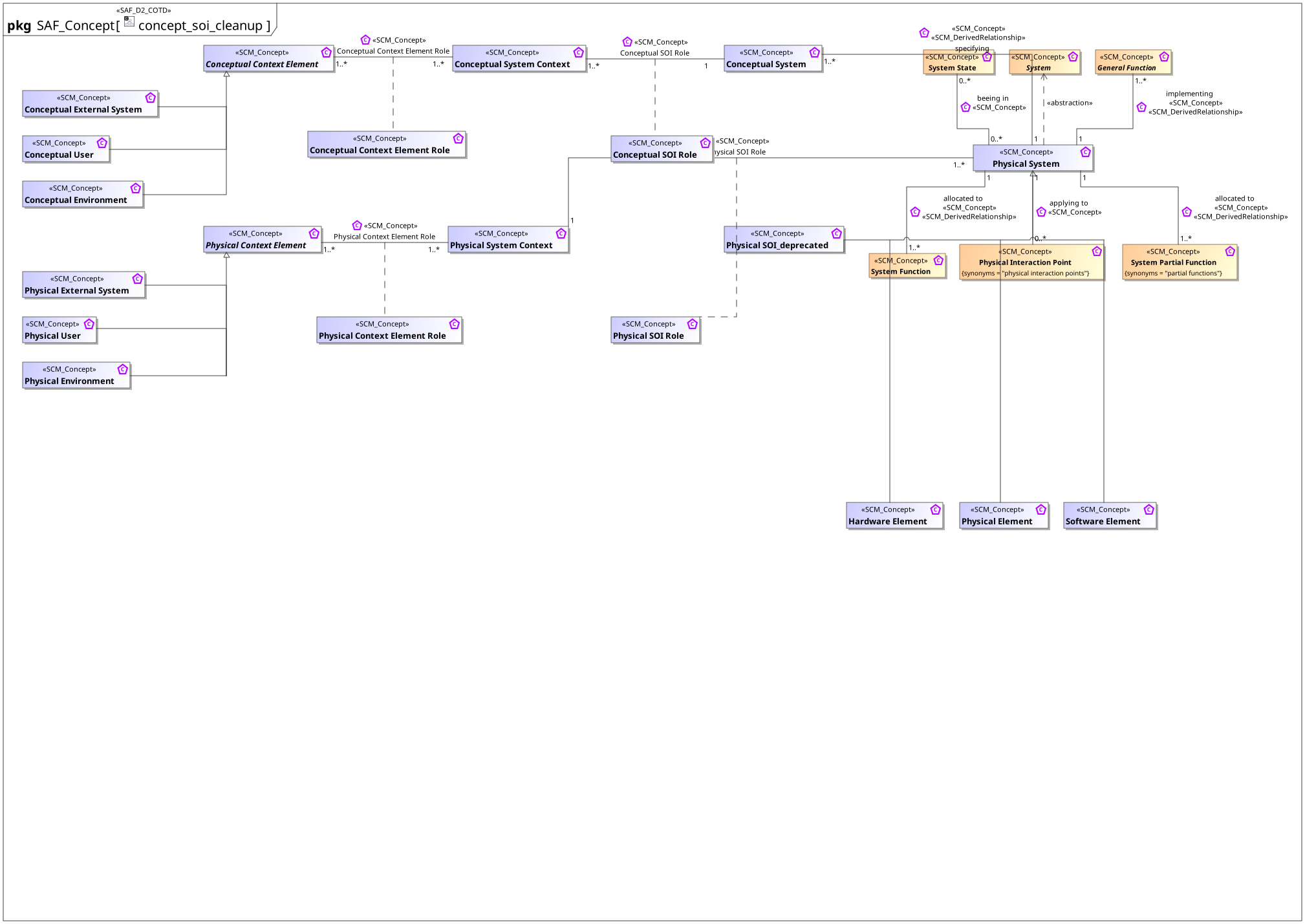
| Concept | Documentation |
|---|
| Conceptual Context Element | Represents an abstract element in the given System Context on Conceptual Level, outside the SOI scope, interacting with the SOI. |
| Conceptual External System | A Conceptual External System in the Conceptual Domain, outside the SOI scope, interacting with the SOI. E.g., power grid, mobile network, fresh water system (in a house). |
| Conceptual System Context | Specifies the fact that a System Context for a System of Interest is defined on Conceptual Level. |
| Physical Environment | The Physical Environment in the Physical Domain, outside the SOI scope, interacting with the SOI. E.g. air, dirt, sun, road. |
| Physical System Context | Specifies the fact that a context for a System of Interest is defined on Physical Level. |
| Physical SOI_deprecated | Represents the Physical SOI on Physical Level. |
| Physical Context Element | Abstract element of a System Context on Physical Level, outside the SOI scope, interacting with the SOI. |
| Physical External System | The Physical External System in the Physical Domain, outside the SOI scope, interacting with the SOI. E.g. power grid, mobile network, fresh water system (in a house). |
| System State | Describes a state (or mode) of something on system level that can have distinct states. |
| System Function | Specifies the fundamental action or task that have to take place in the System in accepting and processing the inputs and in processing and generating the outputs. A System Function * accepts input from the System boundary * exposes its output at the System boundary * changes the System's State * is dependent on System's State Note: A System Function does not need to expose observable output, when it changes the System's state in a way that is observable by other system functions. Furthermore, a System Function does not need to accept any input from the system boundary, when it is dependent on the System State, which in turn is changeable by other System Functions. |
| allocated to | Specifies the fact that a relationship is derived from the assignment of Functions to Logical Elements and the assignment of Logical Elements to Physical Elements. |
| Software Element | Pure Software Elements. Similarity with the V-Model "software unit". |
| Physical Element | A composition of Hardware and Software Elements. Similarity with the V-Model segments and system. See [VXT]. |
| applying to | Specifies the fact that a Physical Interaction Point applies to an Abstract Physical Element. |
| Physical Interaction Point | Specifies the existence of an interaction point on Physical Level. |
| Hardware Element | Pure Hardware Elements. Similarity with the V-Model "hardware unit". |
| Conceptual System | Describes a conceptual system as specification for an implementation of a system. It is used in both functional and logical architectures on any hierarchy level. |
| Physical System | Abstract element representing physical structure items keeping properties and relations applicable to all physical items. |
| Conceptual Environment | A Conceptual Environment in the Conceptual Domain, outside the SOI scope, interacting with the SOI. E.g., air, dirt, sun, road. |
| Conceptual User | The Conceptual User is the representation for a human in the Conceptual Domain, outside the SOI scope, interacting with the SOI. |
| Conceptual Context Element Role | Specifies the fact that a Conceptual Context Element acts in a given Conceptual System Context. |
| Conceptual SOI Role | Specifies the fact that a Conceptual System acts as SOI exists in a given Conceptual System Context. |
| Physical Context Element Role | Specifies the fact that a Physical Context Element exists in a given Physical System Context. |
| Physical SOI Role | Specifies the fact that a Physical SOI exists in a given Physical System Context. |
| Physical User | The Physical User is the representation for a human in the physical domain, outside the SOI scope, interacting with the SOI. |
| beeing in | Specifies the fact that a Physical System Element can be in distinct states. |
| System Partial Function | Specifies the fact that a System Partial Function is a decomposed part of a System Function and defines details of the System Function it belongs to. |
| General Function | Specifies a General Function. It is used as base Class for specific System or Context Functions, or Partial Functions. |
| implementing | |
| allocated to | Specifies the fact that a System Partial Function is assigned to an Abstract Physical Element. Note: This fact may be derived from the Usage of Function of a System Partial Function allocated to a Physical SOI Element Role |
| specifying | Specifies the fact that one or more Logical Element specifies exactly one Physical Element. Rationale: If more than one Physical Element would offer to realize the functionality specified by a Logical Element the responsibility would be ambiguous. It is okay to assign several Logical Elements to one Physical Element. This means all specified functionality assigned to the Logical Elements is to be implemented by the Physical Element. Note, that typically the usage of logical elements in a context is mapped to the usage of physical elements in a context (allocation of usage). Thus this relationship between the definitions is derived. |
| System | An abstract element representing a System. |