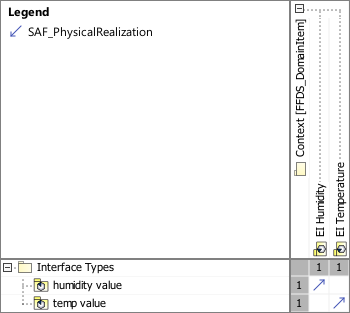
P8_PLOM Physical Logical Mapping Viewpoint
| Domain | Aspect | Maturity |
|---|---|---|
| Physical | Traceability & Mapping |  released released |
Purpose
The Physical Logical Mapping Viewpoint supports the definition of the mapping of conceptual system elements to physical system elements and conceptual exchange types to physical exchange types. This allows to trace how concepts are physically implemented and provides feedback to the System Architecture Definition process to consolidate or confirm the alignment physical implementations with their specifying concepts.
Applicability
The Physical Logical Mapping Viewpoint supports the “Design Definition Process” activities of the INCOSE SYSTEMS ENGINEERING HANDBOOK 2023 [§2.3.5.5] and contributes to the artifact “Traceability Mapping”.
Furthermore, the Physical Logical Mapping Viewpoint supports the “Allocation and Partitioning of Logical Entities to Physical Entities” activities of the INCOSE SYSTEMS ENGINEERING HANDBOOK 2015 [§4.4.2.7].
Supported Processes
Supported Information Items
Presentation
A assignment matrix featuring *Conceptual elements
- Physical Elements
- Realization relationship from physical elements element roles to conceptual elements
Stakeholder
Concern
- From which conceptual item (energy, material, information) is a physical item derived?
- Which conceptual elements are allocated to which physical elements?
Exposed Concepts
The Diagram shows the concepts exposed by the viewpoint, and related concepts if necessary.
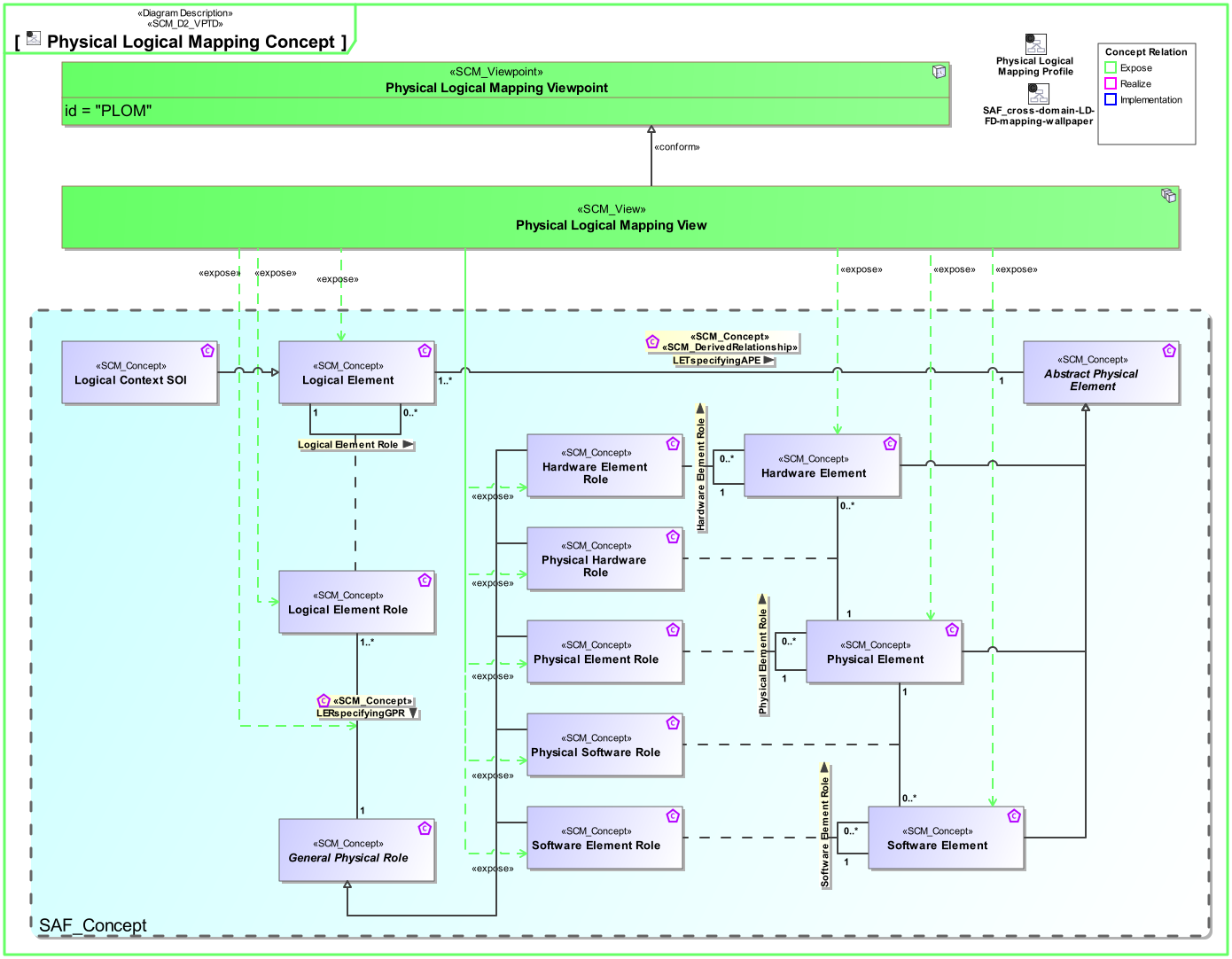
The Table shows the concepts exposed by the viewpoint, and related concepts if necessary.
| Concept | Documentation |
|---|---|
| Hardware Element | Pure Hardware Elements. Similarity with the V-Model "hardware unit". |
| Physical Element | A composition of Hardware and Software Elements. Similarity with the V-Model segments and system. See [VXT]. |
| Software Element | Pure Software Elements. Similarity with the V-Model "software unit". |
| Conceptual System | Describes a conceptual system as specification for an implementation of a system. It is used in both functional and logical architectures on any hierarchy level. |
| Hardware Element Role | Specifies the fact that a hardware structure comprises hardware elements. |
| specifying | Specifies that a usage of a Logical Element specifies functions for the usage of a Physical Element. |
| realizing | Specifies the fact that a Conceptual Exchange Type is realized by Physical Exchange Types. |
| Physical Exchange Type | Specification for any kind of physical item (energy, material, information, etc.) to be exchanged on Physical Level. This is the realization of the specification made by System Domain Kinds. |
| Conceptual Exchange Type | Specification for any type of conceptual item (energy, material, information, etc.) to be exchanged on Conceptual (Functional Architecture and Logical Architecture) Level. The Conceptual Exchange Type is agnostic to any realization on Physical Level. |
| Physical Hardware Role | Specifies the fact that a physical structure comprises hardware elements. |
| Physical Element Role | Specifies the fact that a physical structure comprises physical elements. |
| Physical Software Role | Specifies the fact that a physical structure comprises software elements. |
| Software Element Role | Specifies the fact that a software structure comprises software elements. |
| Conceptual Internal Role | Specifies the fact that a Conceptual System may consist of Conceptual Systems (a white box perspective on a conceptual system). |
Realization of exposed Concepts
The Diagram shows the realization of exposed concepts.
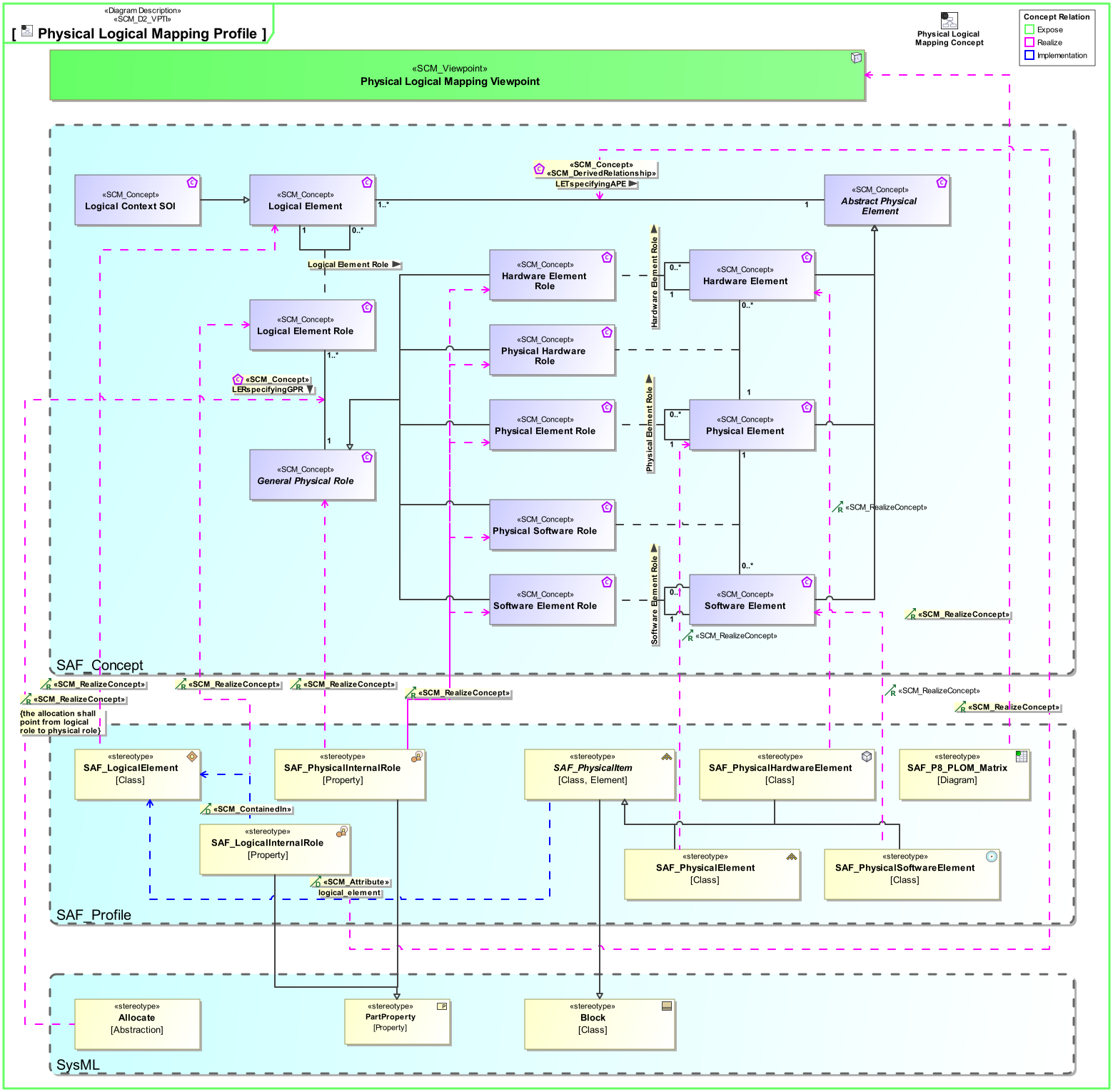
The Table shows the realization of exposed concepts.
Related Viewpoints
Required Viewpoints
Recommended Viewpoints
Example